Tesla stock is facing a turbulent phase this year, as the company struggles to balance slowing EV demand with its ambitious AI-driven future. In the first quarter of 2026, Tesla delivered around 358,000 vehicles, missing analyst expectations and marking one of its weakest quarters in recent years. The market reaction was immediate. Shares dropped following the announcement, continuing a broader downward trend this year. The Core Problem: Demand vs Supply The biggest red flag for investors is not just missed estimates. It’s the growing gap between production and demand. Tesla produced over 50,000 more cars than it sold in Q1 This marks the largest inventory surplus in its history This imbalance suggests weakening demand, especially in key markets. Several factors are driving this slowdown: Expiration of EV tax incentives Rising competition from Chinese automakers like BYD Aging product lineup with...
Tesla stock is facing a turbulent phase this year, as the company struggles to balance slowing EV demand with its ambitious AI-driven future. In the first quarter of 2026, Tesla delivered around 358,000 vehicles, missing analyst expectations and marking one of its weakest quarters in recent years.
The market reaction was immediate. Shares dropped following the announcement, continuing a broader downward trend this year.
The Core Problem: Demand vs Supply
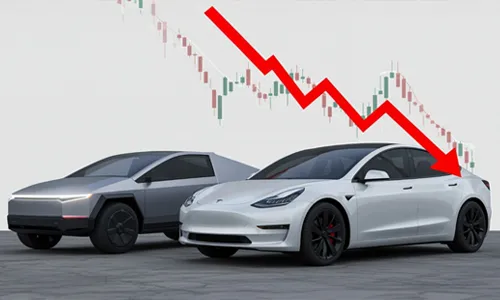
The biggest red flag for investors is not just missed estimates. It’s the growing gap between production and demand.
- Tesla produced over 50,000 more cars than it sold in Q1
- This marks the largest inventory surplus in its history
This imbalance suggests weakening demand, especially in key markets.
Several factors are driving this slowdown:
- Expiration of EV tax incentives
- Rising competition from Chinese automakers like BYD
- Aging product lineup with fewer new models
Even though deliveries rose slightly year-over-year, the broader trend shows declining momentum.
Tesla’s Big Pivot: AI, Robotaxis, and Beyond
While its EV business shows cracks, Tesla is betting heavily on the future.
CEO Elon Musk is shifting focus toward:
- Autonomous robotaxis (Cybercab)
- Humanoid robots like Optimus
- AI-driven software and infrastructure
These projects are exciting, but they are not yet major revenue drivers. In fact, Tesla’s EV business still generates the bulk of its income.
This creates a tension for Tesla stock:
Investors are pricing in future innovation, while current revenues depend on slowing car sales.
Competition Is Heating Up
Tesla is no longer the uncontested EV leader.
Chinese automakers, especially BYD, are rapidly gaining ground with:
- Lower-priced electric vehicles
- Faster product cycles
- Strong domestic and global expansion
In fact, Tesla has already lost its EV sales lead in some markets.
This intensifying competition is putting pressure on pricing, margins, and long-term growth expectations.
What’s Next for Tesla Stock?
Despite current challenges, Tesla remains one of the most closely watched tech stocks in the world.
Here’s what could shape its future:
Bull case:
- Breakthrough in autonomous driving
- Successful robotaxi rollout
- Growth in AI and energy storage
Bear case:
- Continued decline in EV demand
- Rising competition eroding margins
- Delays in monetizing AI initiatives
Tesla stock is at a crossroads. On one side, there’s a slowing EV business facing real-world challenges. On the other hand, a bold vision of AI, robotics, and autonomous mobility. For investors, the question is simple but critical: Will Tesla’s future innovations arrive fast enough to offset today’s slowdown?
Right now, the market is still deciding.



Can a Smart Home Work Without Internet? Explained
Solana’s Worth in Future: What Could 1 SOL Be Worth?
How to Wake Up the System From Sleep Mode on Any Computer
The Mokacam 4K Sports and Action Camera: Tiny but Powerful