Blue Origin, the aerospace company founded by Jeff Bezos, has set its sights on the next frontier of global connectivity. At the heart of this ambition are the TeraWave satellites, an advanced constellation designed to deliver ultra-high-speed data transmission — up to 6 terabits per second (Tbps) per satellite — from space directly to users on Earth and in orbit. This represents a bold evolution in how satellite networks serve the world’s communication needs: not just connecting remote regions, but providing fiber-like speeds without ground infrastructure. What Are TeraWave Satellites? TeraWave satellites are part of Blue Origin’s planned orbital communications network. Unlike earlier satellite internet systems that focused on broad coverage and modest speeds, this constellation will emphasize exceptionally fast data transfer. With each satellite capable of handling millions of times the bandwidth of traditional systems, the goal is to...
Blue Origin, the aerospace company founded by Jeff Bezos, has set its sights on the next frontier of global connectivity. At the heart of this ambition are the TeraWave satellites, an advanced constellation designed to deliver ultra-high-speed data transmission — up to 6 terabits per second (Tbps) per satellite — from space directly to users on Earth and in orbit.
This represents a bold evolution in how satellite networks serve the world’s communication needs: not just connecting remote regions, but providing fiber-like speeds without ground infrastructure.
What Are TeraWave Satellites?
TeraWave satellites are part of Blue Origin’s planned orbital communications network. Unlike earlier satellite internet systems that focused on broad coverage and modest speeds, this constellation will emphasize exceptionally fast data transfer. With each satellite capable of handling millions of times the bandwidth of traditional systems, the goal is to support:
- Broadband internet everywhere
- High-definition media streaming
- Real-time cloud computing from remote locations
- Connectivity for airborne and maritime users
- Low-latency communication for advanced applications
This isn’t just faster satellite internet — it’s a leap toward space-based networking that can rival terrestrial fiber optics in speed and responsiveness.
How Does 6 Tbps Compare to Current Networks?
To put 6 Tbps into perspective:
- A typical home internet connection today ranges from 100 Mbps to 1 Gbps
- Flagship terrestrial fiber services push toward 10 Gbps for consumers
- 6 Tbps matches thousands of modern home connections combined
- It can support data-heavy applications like large corporate networks, massive IoT deployments, and real-time video streaming with ease
The sheer volume of data TeraWave satellites promise could fundamentally change how we build networks — shifting from ground-centric infrastructure to a hybrid ecosystem where space plays a central role.
Why Blue Origin Is Investing in High-Speed Space Networks
Blue Origin’s move into ultra-high-bandwidth satellite networking aligns with several trends:
1. Growing Demand for Ubiquitous Connectivity
People everywhere expect reliable internet, not just in cities. Emerging markets, disaster zones, and remote industries — like offshore energy or scientific stations — need connectivity that traditional cables can’t easily reach.
2. Rise of Data-Intensive Applications
AI, 8K streaming, telepresence, and real-time analytics all require more bandwidth. TeraWave satellites are designed to meet these evolving demands.
3. Strategic Space Infrastructure
Companies are shifting from single-purpose satellites to constellations that act like a global grid, supporting everything from GPS to cloud computing. High-speed networking joins that lineup.
How TeraWave Satellites Work (in Simple Terms)
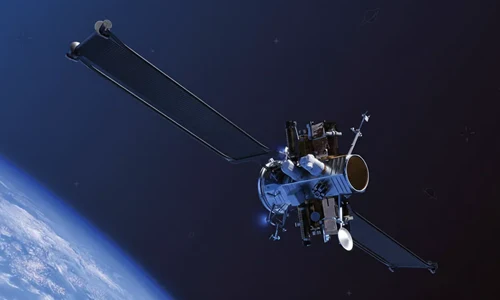
Multi-Beam Antennas
Each TeraWave satellite uses advanced antennas that can focus multiple beams at once, spreading or concentrating signal power where it’s needed most.
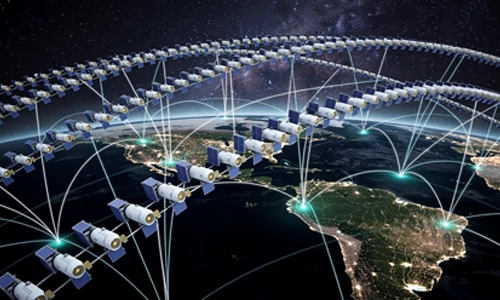
Optical Inter-Satellite Links
Instead of routing all data through Earth stations, these satellites will communicate directly with each other using laser links — reducing latency and increasing network efficiency.
Cloud Integration
Blue Origin plans for tight integration with cloud service providers, letting data be processed closer to the user even when it travels through space.
Together, these technologies build a resilient, high-bandwidth network that adapts to demand in real time.
Potential Applications of TeraWave Satellites
Global Broadband Access
People in underserved or infrastructure-poor areas could finally get high-speed internet without costly cables or towers.
Emergency and Disaster Response
After natural disasters, terrestrial networks are often compromised. TeraWave access could provide resilient, rapid connectivity when it’s most needed.
Connected Mobility
Airlines, shipping fleets, and autonomous vehicles could benefit from seamless, high-speed connectivity during transit.
Enterprise and Cloud Services
Businesses could tap satellite links for hybrid cloud workflows, backups, or global content delivery without waiting for fiber deployments.
Challenges and Considerations
Despite the promise, several hurdles remain:
- Spectrum regulation and coordination across countries
- Launch costs and satellite maintenance
- Ground infrastructure for user terminals
- Competition with other satellite Internet companies
Yet, the trend is clear: demand for data and digital services is only accelerating.
The era of TeraWave satellites points to a future where ultra-high-speed connectivity isn’t tied to fiber in the ground but can come from above — bridging global gaps in access, performance, and reliability. Blue Origin’s vision of 6 Tbps per satellite sets a new benchmark in satellite networking and may influence how future communication systems are architected.
Whether you’re a remote worker, a traveler, an enterprise architect, or just a tech enthusiast, TeraWave satellites suggest that the future of connectivity may be orbiting overhead.

Solana’s Worth in Future: What Could 1 SOL Be Worth?
How to Wake Up the System From Sleep Mode on Any Computer
The Mokacam 4K Sports and Action Camera: Tiny but Powerful
How to Choose the Best Document Scanner for Your Needs