At International CES gadget show, the main focus was autonomous driving. A wide variety of cars utilizing futuristic energy sources were displayed by leading auto manufacturers like BMW, Ford, Toyota, that proved that such cars are not far away from turning into reality. Ford C-MAX Energi A prototype of a solar run hybrid car, C-MAX Solar Energy was showcased by Ford Motor Company, a popular name in the automobile industry. This car will have a gas engine besides solar panels on the rooftop also helping in powering the engine. The car designing has been done in such a manner that it can park under a fifteen foot tall carport which is going to be made up of a slim magnifying glass referred to as Fresnel lens. The rays of the sun will be concentrated on this glass or panel and...
At International CES gadget show, the main focus was autonomous driving. A wide variety of cars utilizing futuristic energy sources were displayed by leading auto manufacturers like BMW, Ford, Toyota, that proved that such cars are not far away from turning into reality.
Ford C-MAX Energi
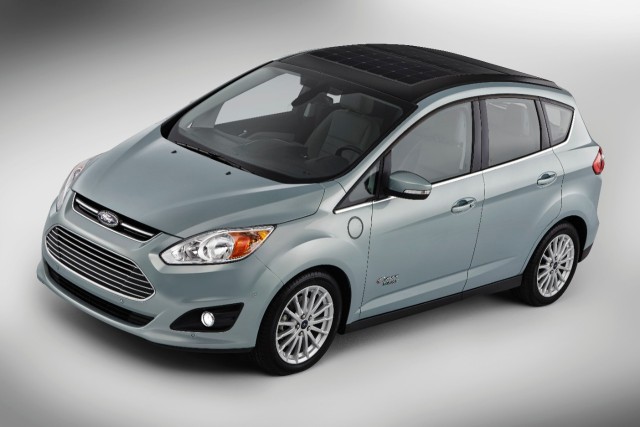
A prototype of a solar run hybrid car, C-MAX Solar Energy was showcased by Ford Motor Company, a popular name in the automobile industry. This car will have a gas engine besides solar panels on the rooftop also helping in powering the engine. The car designing has been done in such a manner that it can park under a fifteen foot tall carport which is going to be made up of a slim magnifying glass referred to as Fresnel lens. The rays of the sun will be concentrated on this glass or panel and electricity will be generated, as a result. Since carport is not portable, for recharging, the car has to stop.
Full charge can be received by 7 hours of sunlight. 7 hours sunlight is, in fact, average light amount seen in any typical city of America. The parking of a vehicle must be parked with east-west facing. The car can be inched forward slowly and gradually so as to make maximum utilization of the rays of sun passing overhead. A full charge will be received with moving the car which would be enough to drive the car for 21 miles on electricity. If the car is not moved, it can be driven only three miles with just 7 hour charge before recharging is required.
Now, this car is undergoing testing, but there is a lot that needs to be figured by the engineers. Carport is being set up to be flat so that it becomes more susceptible to weather. Right now, engineers are also trying to figure out snow and rain and as such a lot of work needs to be done.
Toyota FCV
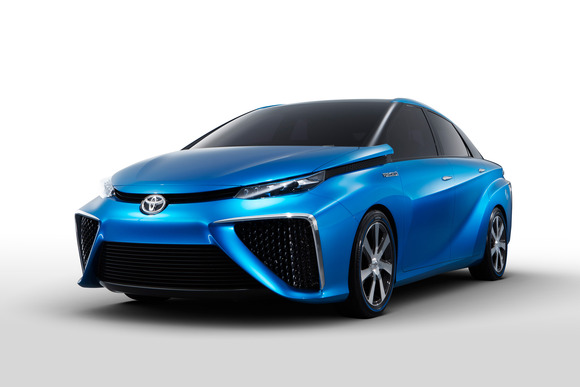
Another vehicle on display is hydrogen fuel cell vehicle from Toyota, which is now referred to as Toyota FCV. This car is expected on sale by next year in the USA. The engine vehicle running on electricity can run up to 300 miles. Its battery uses hydrogen which is stored in 11 pound, or 5 kg tank besides oxygen and as such only water vapour and water is emitted.
The only challenge for using these cars is finding refueling stations in order to drive the car to a reasonable distance. $200 million has been approved by California for the purpose of funding construction of 20 fueling stations. These fueling stations will be ready by 2015. By 2024, 100 fueling stations will be ready. About 10 K vehicles will be supported by 68 refueling stations in the state.
Surely, these cars are going to create a new, Eco-friendly future.




Bitcoin Halving: A Deep Dive into the Scheduled Supply Shock of Bitcoin
Why Are Vertu Phones So Expensive?
Can a Smart Home Work Without Internet? Explained
Solana’s Worth in Future: What Could 1 SOL Be Worth?