Artificial Intelligence continues to reshape the workplace, but there are still roles where humans are indispensable. While AI can automate routine tasks, roles requiring empathy, judgment, creativity, and physical skill remain largely safe. Here’s an expert breakdown of the jobs AI can’t replace, why they matter, and how you can future-proof your career. 1. Human-Centered Professions: Healthcare, Mental Health & Social Work AI excels at pattern recognition and data analysis, but diagnosis and patient care rely on empathy, intuition, and contextual understanding—areas where machines fall short. A Superstaff study found that healthcare roles saved over $150 billion annually by 2026, yet clinical oversight remains essential. Medical professionals like doctors and nurses are still projected to grow by 4–6% over the next decade . AI acts as a support tool, not a replacement. Those in mental health and caregiving roles provide...
Artificial Intelligence continues to reshape the workplace, but there are still roles where humans are indispensable. While AI can automate routine tasks, roles requiring empathy, judgment, creativity, and physical skill remain largely safe. Here’s an expert breakdown of the jobs AI can’t replace, why they matter, and how you can future-proof your career.
1. Human-Centered Professions: Healthcare, Mental Health & Social Work

- AI excels at pattern recognition and data analysis, but diagnosis and patient care rely on empathy, intuition, and contextual understanding—areas where machines fall short.
- A Superstaff study found that healthcare roles saved over $150 billion annually by 2026, yet clinical oversight remains essential.
- Medical professionals like doctors and nurses are still projected to grow by 4–6% over the next decade .
AI acts as a support tool, not a replacement. Those in mental health and caregiving roles provide a level of human nuance AI can't replicate.
2. Skilled Trades: Electricians, Plumbers, and Mechanics

- Jobs requiring dexterity, flexibility, and troubleshooting in unpredictable environments continue to defy automation.
- Skilled trade roles are projected to grow by 30% over the next few years, per the World Economic Forum.
- These roles involve on-site problem-solving and dynamic physical tasks that robots struggle to perform.
With robust demand and practical challenges, skilled trades are strongholds against AI replacement.
3. Creative Fields: Artists, Writers, and Designers

- Creativity and cultural depth often elude algorithmic generation. While AI can mimic, human authenticity remains essential.
- Forbes noted that creative roles such as “Creative Director” scored strong on AI-resistance due to emotional and artistic nuance.
- Bill Gates highlighted that creative professionals—artists, musicians, performers—are among the top roles AI can’t replace.
Innovation rooted in human experience ensures creative jobs stay relevant.
4. Educators & Trainers

- Teaching is more than information delivery—it involves mentorship, adaptability, and emotional connection.
- WEF expects 10% job growth in education by 2027.
- Demand for skills like empathy, active listening, and leadership continues to climb.
AI can support teaching, but cannot replace the human guidance central to meaningful education.
5. Managers & Leadership Roles

- Complex decision-making, team dynamics, and ethical judgment are beyond AI’s current capabilities.
- Forbes analysis revealed roles like “Lawyer,” “HR Manager,” and “General Manager” scored high on human interaction and low on automation risk.
- LinkedIn cofounder Reid Hoffman stressed AI will evolve, not eliminate, white-collar roles.
Leadership combines analytics and human decision-making—something AI alone cannot replicate.
6. Legal Professionals

- Legal roles require interpretation, negotiation, and strategic thinking beyond AI’s literal capabilities.
- Bill Gates specifically included lawyers among jobs AI can’t replace for their reasoning and advocacy roles.
- Legal professionals ranked at the top of jobs with AI-resistant scores.
AI aids legal research, but complex legal practice remains a human domain.
7. Healthcare & Cybersecurity Specialists

- Diagnoses and security threats both rely on human insight, adaptability, and cross-context reasoning.
- Data analyst roles are projected to grow by 23%, cybersecurity jobs by 33%, doctors by 4%, and data scientists by 36%.
- Barclays’ study noted that AI deepens exposure to disease diagnostics but creates a need for cybersecurity and health oversight roles.
Expertise plus human oversight safeguards technical environments.
8. Media, Journalism & Communication Roles
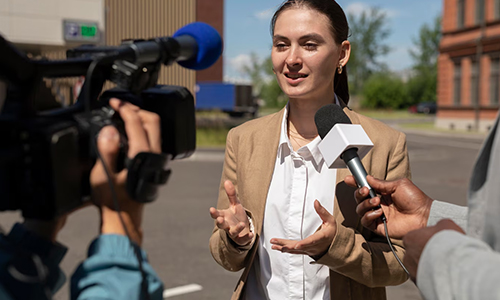
- Contextual reporting, narrative creation, and personal connection are still human strengths.
- Upwork reports list key roles AI can’t replace include investigative reporters, anchors, photojournalists, and motivational speakers.
Storytelling relies on empathy and ethical judgment—still human-exclusive skills.
Important Stats You Must Know
- 30% of hours worked may be automated by 2030, but net job growth remains +78 million globally.
- 47% of U.S. jobs have automation potential by 2033—but mainly for repetitive tasks.
- 41% of employers plan to reduce roles due to AI—but 77% will invest in training roles to work alongside AI.
These figures emphasize transformation over elimination—and highlight the importance of reskilling.
How to Future-Proof Your Career
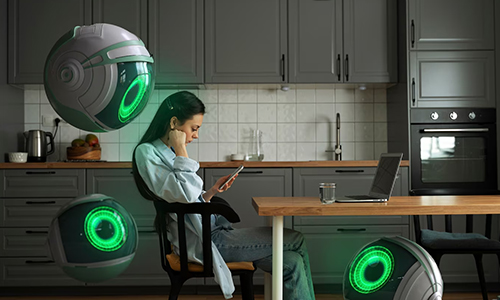
1. Master AI-Complementary Skills
Focus on emotional intelligence, analytical reasoning, creativity, and adaptability .
2. Upskill Continuously
Estimates suggest over 50% of jobs need significant reskilling in the next decade .
3. Work With AI, Not Against It
Surveys show human–AI collaboration increases productivity (e.g., MIT study: +37%).
4. Leverage Human-Only Value
Commit to roles that demand nuance and care—where AI simply can't replicate the human touch.
While AI automation transforms many jobs, there are still many jobs AI can’t replace—especially those rooted in humanity: empathy, creativity, leadership, dexterity, and complex judgment. The future of work isn't a doomsday scenario; it's a partnership where humans and machines work together.
By understanding which roles remain resilient and how to build complementary skills, anyone can navigate this era with confidence. Let AI handle the routine—while humans continue to lead, imagine, heal, teach, and create.
Human Jobs vs. AI Abilities
| Job Role |
What AI Can Do |
What Only Humans Can Do |
| Teachers |
Provide info, grade papers |
Inspire, mentor, and emotionally support |
| Doctors/Nurses |
Analyze data, assist in diagnosis |
Show empathy, comfort patients |
| Artists |
Generate AI-art/music |
Create from lived experiences |
| Skilled Trades |
Simulate training scenarios |
Solve on-the-spot real-world problems |
| Psychologists |
Provide scripted advice |
Build trust, offer nuanced therapy |
FAQs
1. What kinds of jobs are safest from AI takeover?
Jobs that demand emotional intelligence, human judgment, unpredictable environments, or creativity are safest—for example, therapists, teachers, nurses, and artists.
2. Can AI support these jobs instead of replacing them?
Yes. AI can act as a tool or assistant to augment human performance—helping with data, suggestions, or repetitive tasks—while humans handle the core human elements.
3. How can I prepare my career to be tech-resistant?
Focus on soft skills (communication, empathy, leadership), cross-disciplinary thinking, adaptability, and staying current with domain knowledge. Also learn how to work with AI rather than against it.
4. Is there a risk AI will eventually replace even “safe” jobs?
Theoretically, advanced AI could try, but there’s always a gap in replicating consciousness, nuance, real empathy, and moral judgment. That said, no job is 100% future-proof—resilience is key.
5. How should education change if many jobs evolve rather than disappear?
Education should emphasize critical thinking, human-centric skills, interdisciplinary learning, project-based work, and continuous upskilling rather than memorization of static knowledge.




Can a Smart Home Work Without Internet? Explained
Solana’s Worth in Future: What Could 1 SOL Be Worth?
How to Wake Up the System From Sleep Mode on Any Computer
The Mokacam 4K Sports and Action Camera: Tiny but Powerful