Imagine lifting a heavy object, performing precise tasks, or extending your reach far beyond natural limits — all without strain. A robotic arm on human isn’t science fiction anymore. These advanced bionic limbs are transforming lives in medicine, industry, and everyday tasks. In this blog, we explore how robotic arms integrated with humans are revolutionizing strength, mobility, and the very notion of what the human body can achieve. What Is a Robotic Arm on Human? A robotic arm on human refers to a mechanical limb or exoskeleton integrated with a person’s body to support, restore, or enhance arm movement and strength. This can take several forms: Prosthetic robotic arms: Replace lost limbs with motorized, sensor-driven alternatives Exoskeletons: Wearable frames that amplify natural movement and reduce fatigue Augmented assistive devices: Add strength or precision to an otherwise healthy arm These technologies...
Imagine lifting a heavy object, performing precise tasks, or extending your reach far beyond natural limits — all without strain. A robotic arm on human isn’t science fiction anymore. These advanced bionic limbs are transforming lives in medicine, industry, and everyday tasks.
In this blog, we explore how robotic arms integrated with humans are revolutionizing strength, mobility, and the very notion of what the human body can achieve.
What Is a Robotic Arm on Human?
A robotic arm on human refers to a mechanical limb or exoskeleton integrated with a person’s body to support, restore, or enhance arm movement and strength. This can take several forms:
- Prosthetic robotic arms: Replace lost limbs with motorized, sensor-driven alternatives
- Exoskeletons: Wearable frames that amplify natural movement and reduce fatigue
- Augmented assistive devices: Add strength or precision to an otherwise healthy arm
These technologies combine robotics, sensors, AI, and human-machine interfaces to create a seamless experience.
Real Life Uses: From Assistive to Superhuman
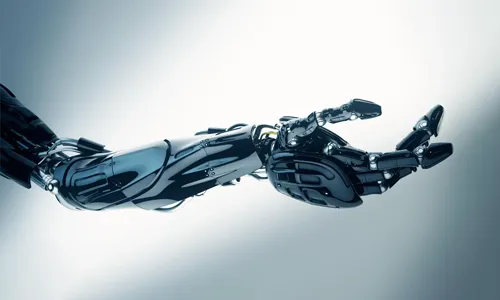
Restoring Mobility After Injury or Amputation
One of the most impactful uses is restoring function for people with limb loss or nerve damage. Modern prosthetic robotic arms can:
- Respond to muscle signals
- Mimic natural hand and finger movement
- Provide sensory feedback (in advanced models)
This allows users to perform daily tasks like eating, typing, and holding objects — capabilities once lost.
Strength and Endurance in Industrial Settings
Exoskeleton-style robotic arms support workers in physically demanding jobs:
- Lifting heavy items with reduced strain
- Maintaining precision over long shifts
- Preventing workplace injuries
In warehouses, construction, and manufacturing, these devices reduce fatigue and improve safety.
Assistance for Everyday Living
Some robotic arms are designed for everyday aid:
- Helping individuals with limited mobility
- Supporting rehabilitation exercises
- Enabling independent living
For example, a robotic arm mounted to a wheelchair can help grasp objects or assist with daily routines.
How Do Robotic Arms on Humans Work?
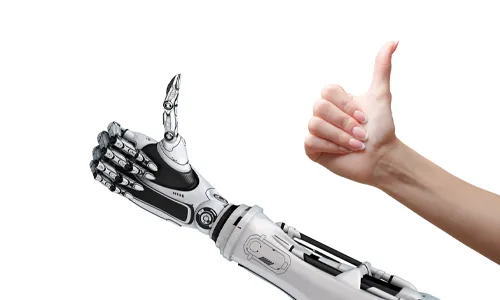
Most systems use a combination of technologies:
Sensors and Interfaces
- EMG sensors: Detect electrical signals from muscles
- Motion trackers: Monitor limb positions
- Brain-computer interfaces (BCIs): Translate neural intent into movement
These inputs allow the system to interpret the user’s intention and respond appropriately.
Control Systems and AI
Advanced controllers and artificial intelligence help smooth movement, adapt to changing tasks, and even predict user intent. Machine learning enables robotic arms to become more precise and intuitive over time.
Power and Actuation
Electric motors, hydraulics, or lightweight pneumatic systems power motion. Recent advances are improving battery life and reducing weight so that devices feel more natural and less cumbersome.
Benefits of a Robotic Arm on Human
Restored Independence
Users can regain a sense of autonomy, performing tasks once difficult or impossible.
Reduced Strain and Injury
In both medical and workplace settings, robotic assistance reduces physical stress and long-term injury risk.
Enhanced Capabilities
Workers can lift heavier loads, surgeons can maintain steady precision, and individuals can interact with their environment with greater control.
Improved Rehabilitation
Robotic arms support therapy, helping users retrain muscles and regain coordination.
Challenges and Future Directions
Despite major progress, challenges remain:
- Cost: High-end robotic arms can be expensive
- Comfort: Long-term wearability and ergonomics need refinement
- Learning curve: Users require training to operate devices effectively
Yet, research continues rapidly. Future developments include:
- Smarter AI adaptive control
- Lighter materials for wearability
- Seamless neural integration
- Shared sensory feedback for more natural interaction
These advances will help robotic arms feel less like tools and more like extensions of the body.
Real Stories: Humans + Robots
Individuals across the world are already benefiting:
- A surgeon using an exoskeleton arm to reduce fatigue during long operations
- An athlete performing rehabilitation with robotic support
- A person with limb loss regaining fine motor tasks with a myoelectric prosthetic
These stories show that robotics isn’t replacing humans — it’s augmenting them.
A robotic arm on human represents a meaningful shift in our relationship with technology. No longer simple machines, these devices blend robotics with human intention to restore abilities, prevent injury, and amplify strength.
As innovation continues, what once seemed futuristic will become mainstream — enabling people to live more independent, empowered, and capable lives. Whether in medicine, industry, or daily living, robotic arms are redefining what’s possible for the human body.




Can a Smart Home Work Without Internet? Explained
Solana’s Worth in Future: What Could 1 SOL Be Worth?
How to Wake Up the System From Sleep Mode on Any Computer
The Mokacam 4K Sports and Action Camera: Tiny but Powerful