Have you ever wished a smart home device could handle your laundry? Thanks to a major breakthrough by Figure AI, that notion is moving rapidly toward reality. They’ve developed Helix, a humanoid robot that folds laundry autonomously, using advanced AI tailored for household chores. What Makes Folding Laundry So Challenging—and Why Helix Nailed It Folding a towel isn’t as simple as it looks. Towels are soft, flexible, and constantly changing shape—making them difficult for robots to grasp or predict. A tiny slip can cause wrinkles or dropped corners, and without fixed geometry, robotic manipulation becomes tricky. Helix overcomes these challenges by using a Vision-Language-Action (VLA) neural model that handles: Edge tracing with precision Corner pinching to keep folds tidy Tangle resolution to separate towels from messy piles Dynamic recovery, like picking an extra towel and putting it back Most notably,...
Have you ever wished a smart home device could handle your laundry? Thanks to a major breakthrough by Figure AI, that notion is moving rapidly toward reality. They’ve developed Helix, a humanoid robot that folds laundry autonomously, using advanced AI tailored for household chores.
What Makes Folding Laundry So Challenging—and Why Helix Nailed It
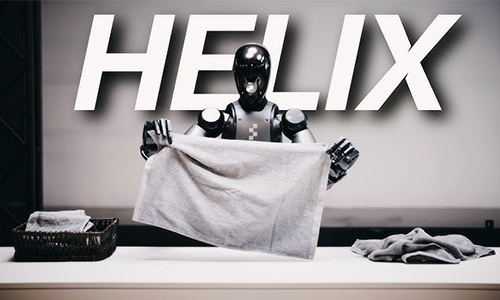
Folding a towel isn’t as simple as it looks. Towels are soft, flexible, and constantly changing shape—making them difficult for robots to grasp or predict. A tiny slip can cause wrinkles or dropped corners, and without fixed geometry, robotic manipulation becomes tricky.
Helix overcomes these challenges by using a Vision-Language-Action (VLA) neural model that handles:
- Edge tracing with precision
- Corner pinching to keep folds tidy
- Tangle resolution to separate towels from messy piles
- Dynamic recovery, like picking an extra towel and putting it back
Most notably, Helix achieves this with its multi-fingered hands, coordinating vision to motion in real time—no rigid programming, just seamless AI.
Why This Breakthrough Is a Big Deal
- First of its kind: This is the inaugural use of a humanoid robot folding laundry fully autonomously.
- One model, many tasks: Helix uses the same architecture as in industrial logistics tasks—no structural changes required—only a new dataset.
- Lifelike interaction: The robot maintains eye contact, uses gestures, and responds in context—adding a human touch to home assistance.
What This Means for Smart Home Devices
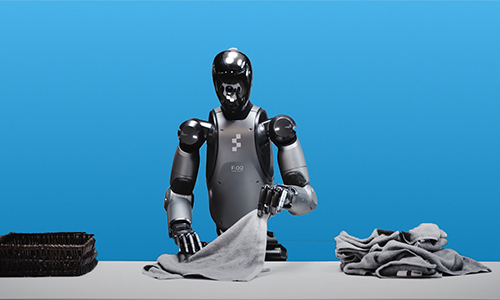
This leap forward signals a future where smart home devices evolve from voice assistants to physical helpers. Imagine:
- Robots folding laundry while you relax
- Automated chore cycles integrated with your washer and dryer
- Personal assistants that interact naturally, not like cold machinery
The foundations of these capabilities are already being laid—with Helix demonstrating both versatility and finesse.
FAQs
How does the robot fold laundry autonomously?
Helix uses an end-to-end neural network linking vision, language input, and precise motor control to handle towels from pile to neatly folded stack—without manual programming.
Can the same robot fold other items like clothes or sheets?
Currently, the focus is on towels. But since Helix can generalize actions with new datasets, expanding its skillset is entirely plausible.
Is laundry-folding the robot’s only task?
No. Helix was first used in logistics and package handling—its architecture is designed to adapt across environments with only data retraining.
When might these robots be affordable for home use?
There's no release timeline yet. While prototypes like Helix are expensive today, advances in AI and manufacturing could make home models accessible over the next decade.
By demonstrating that a robot folds laundry autonomously, Figure AI is blazing a trail toward real smart home helpers. While top-tier models like Helix are still emerging, the future they promise—robots handling everyday chores reliably and intuitively—is the next big step for home automation.



Can a Smart Home Work Without Internet? Explained
Solana’s Worth in Future: What Could 1 SOL Be Worth?
How to Wake Up the System From Sleep Mode on Any Computer
The Mokacam 4K Sports and Action Camera: Tiny but Powerful