Augmented Reality (AR) technology has made significant strides in recent years, from gaming and entertainment to industrial applications and medical fields. However, one of the most intriguing and ambitious developments in this space is the concept of augmented reality contact lenses. These smart lenses promise to overlay digital information directly onto the wearer’s field of vision, creating a seamless blend of the virtual and real worlds. But will these futuristic devices ever become a reality? In this blog, we'll explore the current state of AR contact lenses, the technological challenges they face, and the potential future of this innovative technology. Key Takeaways • AR contact lenses aim to display digital information directly within a user’s field of vision. • Companies such as Mojo Vision are actively developing smart contact lens technology. • Potential applications include healthcare, navigation, education, gaming, and...
Augmented Reality (AR) technology has made significant strides in recent years, from gaming and entertainment to industrial applications and medical fields. However, one of the most intriguing and ambitious developments in this space is the concept of augmented reality contact lenses. These smart lenses promise to overlay digital information directly onto the wearer’s field of vision, creating a seamless blend of the virtual and real worlds. But will these futuristic devices ever become a reality? In this blog, we'll explore the current state of AR contact lenses, the technological challenges they face, and the potential future of this innovative technology.
Key Takeaways
• AR contact lenses aim to display digital information directly within a user’s field of vision.
• Companies such as Mojo Vision are actively developing smart contact lens technology.
• Potential applications include healthcare, navigation, education, gaming, and workplace productivity.
• Significant challenges remain, including battery life, miniaturization, comfort, and safety.
• AR contact lenses could become one of the most advanced wearable technologies of the future.
What Are Augmented Reality Contact Lenses?
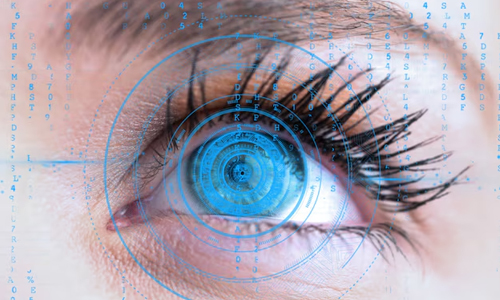
AR contact lenses are essentially wearable devices that fit over the eye like traditional contact lenses. However, unlike conventional lenses, AR contact lenses are designed to project digital images and information onto the wearer’s field of vision. This could include anything from navigation directions and notifications to real-time translations and enhanced visual details. The idea is to create an immersive AR experience without the need for bulky headsets or glasses.
Augmented Reality (AR) contact lenses are next-generation wearable devices designed to display digital information directly within a user's field of vision. Unlike traditional contact lenses that only correct eyesight, AR contact lenses combine advanced microelectronics, sensors, and display technology to overlay real-time information onto the physical world.
The goal is to provide a hands-free augmented reality experience without the need for bulky headsets or smart glasses. From navigation prompts and health monitoring to instant notifications and language translation, AR contact lenses have the potential to transform how people interact with digital information in everyday life.
Current State of AR Contact Lenses
Several companies and research institutions are actively developing AR contact lenses, with some making significant progress. Here are a few notable examples:
1. Mojo Vision
Mojo Vision is one of the leading companies in the AR contact lens space. Their prototype, Mojo Lens, features a microLED display, wireless communication, and eye-tracking capabilities. The lens is designed to provide real-time information and notifications, all while remaining virtually invisible to others.
2. InWith Corporation
InWith Corporation is working on soft contact lenses embedded with microelectronics. Their lenses aim to provide AR capabilities while maintaining the comfort and flexibility of regular contact lenses. The company focuses on integrating electronic circuits into the hydrogel material used in traditional lenses.
3. Samsung and Sony
Tech giants like Samsung and Sony have also filed patents for AR contact lens technology. These patents suggest interest in developing lenses that can capture images, record videos, and display AR content directly on the eye's surface.
In addition to these companies, several technology giants and research institutions continue investing in wearable computing and next-generation vision technology. As advancements in micro-displays, wireless connectivity, and eye-tracking systems improve, AR contact lenses are becoming increasingly realistic.
How Do Augmented Reality Contact Lenses Work?
AR contact lenses rely on a combination of miniature components packed into a lens small enough to sit comfortably on the eye. These components may include micro-displays, motion sensors, wireless communication systems, and tiny processors.
The lenses can project digital images directly onto the wearer's retina while remaining transparent enough to maintain normal vision. Some prototypes are also being developed with eye-tracking capabilities, allowing users to interact with virtual content through natural eye movements.
To function effectively, AR contact lenses may connect wirelessly to smartphones, wearable devices, or cloud-based systems that provide the processing power needed for advanced applications.
Technological Challenges
While the concept of AR contact lenses is fascinating, several significant technological challenges must be overcome to make them a practical reality.
1. Miniaturization
One of the primary challenges is miniaturizing the necessary components, such as displays, sensors, and power sources, to fit within the tiny form factor of a contact lens. Current prototypes are impressive, but further advancements in nanotechnology and materials science are needed to achieve the desired level of miniaturization.
2. Power Supply
Powering AR contact lenses is another significant hurdle. The lenses need a reliable and long-lasting power source that doesn't add bulk or discomfort. Potential solutions include wireless power transfer, energy harvesting from eye movements, and advanced micro-batteries.
3. Display Technology
Creating a high-resolution, transparent display that can project images onto the eye without obstructing vision is crucial. MicroLEDs and other advanced display technologies are being explored, but achieving the necessary brightness, clarity, and color accuracy remains a challenge.
4. Connectivity and Data Processing
AR contact lenses need to process and display data in real-time, requiring robust connectivity and efficient data processing capabilities. This involves integrating wireless communication technologies and ensuring the lenses can handle complex computations without overheating.
5. Safety and Comfort
Ensuring the safety and comfort of AR contact lenses is paramount. The lenses must be biocompatible, non-irritating, and safe for prolonged wear. Additionally, addressing potential health risks associated with prolonged exposure to digital displays close to the eyes is essential.
Additional Challenges Facing AR Contact Lens Technology
Despite rapid progress, several obstacles still stand between prototypes and mass-market adoption.
Privacy Concerns
As AR technology becomes more integrated into daily life, questions surrounding data collection, facial recognition, and user privacy will become increasingly important.
Cost and Manufacturing
Producing advanced smart lenses at scale while maintaining affordability remains a complex challenge for manufacturers.
Regulatory Approval
Like many wearable and health-related technologies, AR contact lenses will need to pass strict regulatory and safety standards before becoming widely available to consumers.
Potential Applications
If AR contact lenses become a reality, they could revolutionize various industries and aspects of daily life. Here are some potential applications:
1. Healthcare
AR contact lenses could assist surgeons with real-time data and overlays during operations, enhance diagnostic procedures, and help individuals with vision impairments by providing visual aids.
2. Navigation and Travel
Travelers could use AR contact lenses for hands-free navigation, real-time translations, and tourist information, enhancing their travel experience.
3. Entertainment and Gaming
AR contact lenses could take immersive gaming and entertainment experiences to new heights, offering a fully integrated AR experience without the need for headsets.
4. Work and Productivity
Professionals could benefit from AR contact lenses that provide heads-up displays of information, improving efficiency and productivity in various fields such as engineering, construction, and logistics.
5. Education and Training
AR contact lenses could transform education and training by offering interactive learning experiences, real-time tutorials, and virtual simulations directly in the wearer's field of vision.
Real-World Applications Beyond the Future
Accessibility Support
AR lenses could assist individuals with visual impairments by highlighting obstacles, recognizing objects, or displaying contextual information about their surroundings.
Fitness and Sports
Athletes may benefit from real-time performance metrics such as speed, heart rate, distance traveled, and navigation guidance without needing to look at a separate device.
Smart Workplace Assistance
Technicians, engineers, and field workers could access instructions, diagrams, and operational data while keeping their hands free, improving efficiency and safety.
When Could AR Contact Lenses Become Mainstream?
While significant progress has been made, AR contact lenses are still in the early stages of development. Most current prototypes are focused on testing core technologies and proving long-term usability.
Industry experts believe widespread consumer adoption may still be several years away. Advances in battery technology, wireless connectivity, display systems, and manufacturing processes will play a major role in determining how quickly these devices become commercially viable.
The Future of AR Contact Lenses
While AR contact lenses are still in the developmental stages, the progress made by companies and researchers is promising. The technology has the potential to revolutionize how we interact with the world, offering unprecedented levels of convenience, efficiency, and immersion. However, achieving this vision will require overcoming significant technological challenges and ensuring the safety and comfort of the lenses.
The future of AR contact lenses will likely depend on continued advancements in materials science, nanotechnology, and display technologies. Collaborations between tech companies, research institutions, and regulatory bodies will be essential to address the technical and ethical considerations associated with this innovative technology.
Augmented reality contact lenses hold immense potential to transform various aspects of our lives, from healthcare and navigation to entertainment and productivity. While significant challenges remain, ongoing research and development efforts are bringing us closer to making this futuristic vision a reality. As technology continues to evolve, the dream of seamless AR integration through contact lenses may soon become an everyday reality.


Can a Smart Home Work Without Internet? Explained
Solana’s Worth in Future: What Could 1 SOL Be Worth?
How to Wake Up the System From Sleep Mode on Any Computer
The Mokacam 4K Sports and Action Camera: Tiny but Powerful