As the Internet of Things (IoT) ecosystem expands across industries—from smart homes and cities to industrial automation and healthcare—the urgency for ironclad security has never been greater. With billions of connected devices expected to be online in the next few years, threats like data breaches, device hijacking, and botnet attacks are rapidly evolving. In response, a group of standout IoT security companies has emerged as leaders, building innovative defenses to protect the edge and beyond. Here's a closer look at some of the coolest and most impactful IoT security companies in 2025. 1. Armis Why it's cool: Armis is an agentless security platform built specifically for unmanaged and IoT devices. It offers real-time visibility, risk assessment, and threat detection without interfering with device performance. Armis is used across healthcare, retail, and manufacturing industries where traditional endpoint security doesn’t cut it....
As the Internet of Things (IoT) ecosystem expands across industries—from smart homes and cities to industrial automation and healthcare—the urgency for ironclad security has never been greater. With billions of connected devices expected to be online in the next few years, threats like data breaches, device hijacking, and botnet attacks are rapidly evolving.
In response, a group of standout IoT security companies has emerged as leaders, building innovative defenses to protect the edge and beyond. Here's a closer look at some of the coolest and most impactful IoT security companies in 2025.
1. Armis

Why it's cool: Armis is an agentless security platform built specifically for unmanaged and IoT devices. It offers real-time visibility, risk assessment, and threat detection without interfering with device performance. Armis is used across healthcare, retail, and manufacturing industries where traditional endpoint security doesn’t cut it.
2. Claroty
Why it matters: Claroty focuses on Operational Technology (OT) and Industrial IoT (IIoT) security. Its platform safeguards critical infrastructure like energy grids and water systems. By delivering deep network visibility and anomaly detection, Claroty ensures uptime and protection in mission-critical environments.
3. Nozomi Networks
Standout feature: Nozomi specializes in cybersecurity for industrial control systems. It blends AI-driven monitoring with threat intelligence to secure power plants, transportation systems, and oil & gas networks. With increased attacks on public infrastructure, Nozomi is a name to know.
4. Forescout Technologies

The edge defender: Forescout provides real-time device visibility and control across IT, OT, and IoT environments. Its platform can auto-segment traffic and enforce security policies, making it a powerful tool in the enterprise IoT space.
5. Shield-IoT
Cloud-first and scalable: Shield-IoT uses AI and anomaly detection to secure large-scale IoT networks, such as those run by telecom operators and smart city projects. Its agentless approach allows seamless integration without slowing down performance.
6. Cisco (IoT Threat Defense)
Legacy meets innovation: Cisco has extended its enterprise-grade security to the IoT realm. With tools like IoT Threat Defense and industrial network firewalls, Cisco provides scalable solutions for smart factories and connected devices globally.
7. Darktrace
AI-powered protection: Darktrace uses machine learning to detect emerging threats across complex IoT environments. Its “Autonomous Response” feature can contain threats instantly—before human teams even become aware.
8. NanoLock Security
Why it’s rising fast: NanoLock focuses on protecting connected devices from the firmware level up. It’s especially strong in sectors like automotive, energy, and manufacturing, offering tamper-proof protection for devices with long operational lifespans.
9. CyberX (Now part of Microsoft)

Integrated defense: Acquired by Microsoft, CyberX powers Azure Defender for IoT. It provides visibility and threat protection for industrial IoT networks, with deep packet inspection and asset discovery capabilities.
10. Axiado
Chip-level security: Axiado’s hardware-based security platform provides protection from the silicon layer, addressing root-level attacks. Its approach is particularly valuable for data centers and telecom equipment.
With the attack surface expanding rapidly and cyberattacks growing more sophisticated, these IoT security companies are helping define a safer digital future. Whether through AI, zero-trust architecture, or agentless monitoring, each brings something unique to the IoT security stack.
As IoT devices continue to outpace traditional IT security models, these innovators are not just cool—they’re critical.



Solana’s Worth in Future: What Could 1 SOL Be Worth?
How to Wake Up the System From Sleep Mode on Any Computer
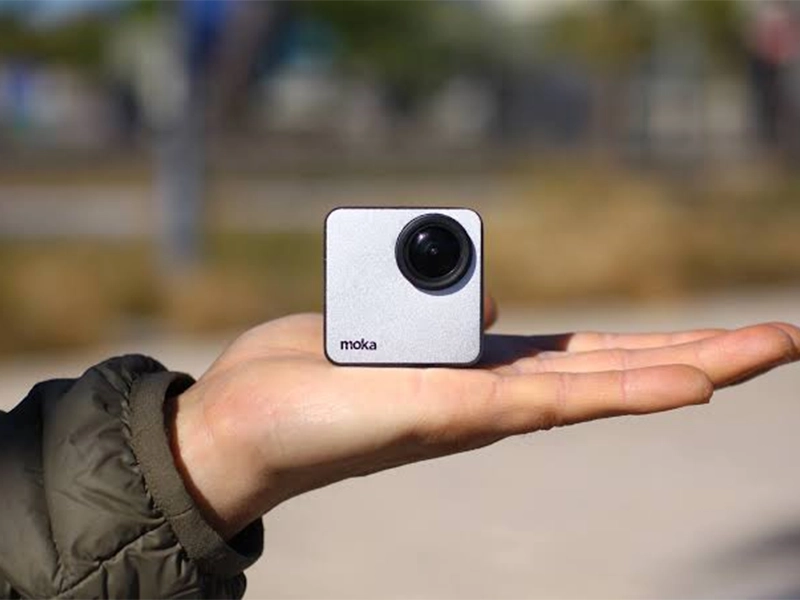
The Mokacam 4K Sports and Action Camera: Tiny but Powerful
How to Choose the Best Document Scanner for Your Needs