Bitcoin has once again rewritten financial history. On [insert date], Bitcoin hit a new all time high (ATH) of $112,000, marking a pivotal shift in how digital assets are perceived by global investors, corporations, and even national governments. Unlike previous surges driven largely by retail speculation, this bull run is fueled by institutional adoption and treasury-level strategies, giving the cryptocurrency space more legitimacy than ever before. Institutional Buying Is Redefining the Bitcoin Narrative Much of Bitcoin’s latest momentum can be credited to heavy institutional involvement. Leading the charge is BlackRock, whose iShares Bitcoin Trust (IBIT) recently closed at a record high of $63.58, amassing over 700,000 BTC—or 3.33% of the total Bitcoin supply. With $187.2 million in annualized fee revenue, IBIT has now overtaken BlackRock’s own S&P 500 ETF (IVV) in profitability—a stunning testament to how institutional trust in Bitcoin...
Bitcoin has once again rewritten financial history. On [insert date], Bitcoin hit a new all time high (ATH) of $112,000, marking a pivotal shift in how digital assets are perceived by global investors, corporations, and even national governments.
Unlike previous surges driven largely by retail speculation, this bull run is fueled by institutional adoption and treasury-level strategies, giving the cryptocurrency space more legitimacy than ever before.
Institutional Buying Is Redefining the Bitcoin Narrative
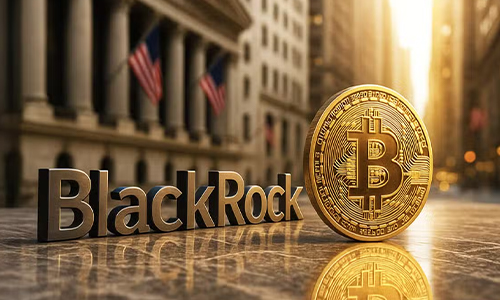
Much of Bitcoin’s latest momentum can be credited to heavy institutional involvement. Leading the charge is BlackRock, whose iShares Bitcoin Trust (IBIT) recently closed at a record high of $63.58, amassing over 700,000 BTC—or 3.33% of the total Bitcoin supply.
With $187.2 million in annualized fee revenue, IBIT has now overtaken BlackRock’s own S&P 500 ETF (IVV) in profitability—a stunning testament to how institutional trust in Bitcoin as a digital treasury asset is not just symbolic but strategic.
El Salvador’s Long-Term Strategy Pays Off
El Salvador, the first country to embrace Bitcoin as legal tender, is also seeing the rewards of early adoption. With over 6,232 BTC in its treasury, the nation is sitting on $400 million in unrealized profits.
President Nayib Bukele’s ongoing plan to purchase 1 BTC per day has demonstrated the power of long-term conviction, with Bukele famously stating that the goal is to continue accumulating “until Bitcoin becomes unaffordable with fiat currencies.”
Corporate Treasury Diversification: The New Playbook

Beyond nation-states, private corporations are rapidly converting cash reserves into Bitcoin. U.K.-based The Smarter Web Company expanded its holdings to 1,000 BTC, citing it as a “pioneering approach to treasury management.”
In the U.S., several Nasdaq-listed firms are following suit—fueled by inflation fears, fiat devaluation, and the belief that Bitcoin offers a better store of value. Strategy Chairman Michael Saylor summed it up best when he said, “If Bitcoin is not going to zero, it’s going to $1 million.”
Bitcoin’s Momentum: Market Data & Future Outlook
- Bitcoin price at ATH: $112,000
- IBIT Holdings: 700,000+ BTC
- ETF Annual Revenue: $187.2 million (vs $187.1M for IVV)
- El Salvador’s BTC Unrealized Gains: $400 million
- Corporate BTC Holding Trend: +15% in Q2 2025 (Source: CoinMetrics)
This rally represents more than hype. It reflects a structural shift in global finance, where Bitcoin is no longer speculative—it’s strategic.
FAQs
Why did Bitcoin hit a new all time high now?
A combination of institutional investment, positive U.S. regulatory outlook, and treasury diversification by global corporations triggered the surge.
Is it too late to invest in Bitcoin?
Many analysts argue that institutional adoption is just beginning, and that the long-term valuation could exceed $500,000 in the next 5 years.
How is Bitcoin performing better than traditional ETFs?
BlackRock’s IBIT now generates more revenue than its flagship S&P 500 ETF—highlighting growing demand from investors looking to hedge against inflation.
What does this mean for the future of Bitcoin?
Bitcoin is becoming a mainstream financial asset, comparable to gold or major market indices, with governments and institutions alike now participating.
With Bitcoin hitting new highs and institutions lining up to secure a slice of the pie, the narrative around digital currencies has fundamentally changed. No longer dismissed as volatile or fringe, Bitcoin now represents resilience, decentralization, and long-term value.
If $112,000 is today’s peak, one can only imagine where tomorrow’s floor might be.





Solana’s Worth in Future: What Could 1 SOL Be Worth?
How to Wake Up the System From Sleep Mode on Any Computer
The Mokacam 4K Sports and Action Camera: Tiny but Powerful
How to Choose the Best Document Scanner for Your Needs