In the ever-evolving landscape of artificial intelligence, OpenAI's ChatGPT has taken another stride towards mimicking human-like interaction with its groundbreaking memory feature. This blog aims to shed light on the intricacies of ChatGPT's ability to remember and forget, offering a glimpse into the future of conversational AI. Understanding ChatGPT's Memory Functionality ChatGPT's memory feature is a transformative addition that allows the model to retain information throughout a conversation. Unlike its predecessor, this version has the ability to remember key details and recall them later in the discourse. This innovative capability enhances the overall user experience, making interactions more dynamic and personalized. How ChatGPT Remembers Information At its core, ChatGPT's memory functionality is based on a sophisticated architecture that enables it to store relevant information during a conversation. When a user provides input, the model processes and contextualizes the data, identifying...
In the ever-evolving landscape of artificial intelligence, OpenAI's ChatGPT has taken another stride towards mimicking human-like interaction with its groundbreaking memory feature. This blog aims to shed light on the intricacies of ChatGPT's ability to remember and forget, offering a glimpse into the future of conversational AI.
Understanding ChatGPT's Memory Functionality
ChatGPT's memory feature is a transformative addition that allows the model to retain information throughout a conversation. Unlike its predecessor, this version has the ability to remember key details and recall them later in the discourse. This innovative capability enhances the overall user experience, making interactions more dynamic and personalized.
How ChatGPT Remembers Information
At its core, ChatGPT's memory functionality is based on a sophisticated architecture that enables it to store relevant information during a conversation. When a user provides input, the model processes and contextualizes the data, identifying essential details for retention. These details are then stored in a temporary memory buffer, allowing ChatGPT to refer back to them when needed.
This memory retention extends beyond individual queries, creating a more fluid and coherent conversation. Users can now receive responses that reflect a deeper understanding of the ongoing discussion, fostering a sense of continuity in interactions.
The Art of Forgetting: ChatGPT's Adaptive Memory
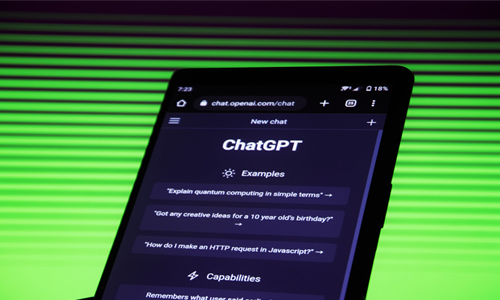
While remembering is a crucial aspect, forgetting is equally essential in ensuring that ChatGPT's memory remains efficient and focused. The model employs an adaptive forgetting mechanism that filters out less relevant information over time. This dynamic process ensures that the memory is continually optimized, allowing ChatGPT to prioritize pertinent details and discard extraneous information.
This balance of remembering and forgetting mirrors the human cognitive process, preventing information overload and maintaining the model's responsiveness in real-time conversations. As a result, ChatGPT can adapt to various conversational contexts, offering a more tailored and natural dialogue.
Practical Applications of ChatGPT's Memory Feature
The integration of a memory feature opens up a plethora of practical applications for ChatGPT. In customer support scenarios, the model can now recall previous interactions, providing a more personalized and efficient service. Additionally, in educational settings, ChatGPT can retain and build upon prior knowledge, creating a more immersive and adaptive learning experience.
The memory feature also proves invaluable in creative writing and content creation. ChatGPT can remember user preferences, writing styles, and specific details from earlier parts of a text, ensuring coherence and consistency in storytelling.
User Control and Privacy Considerations
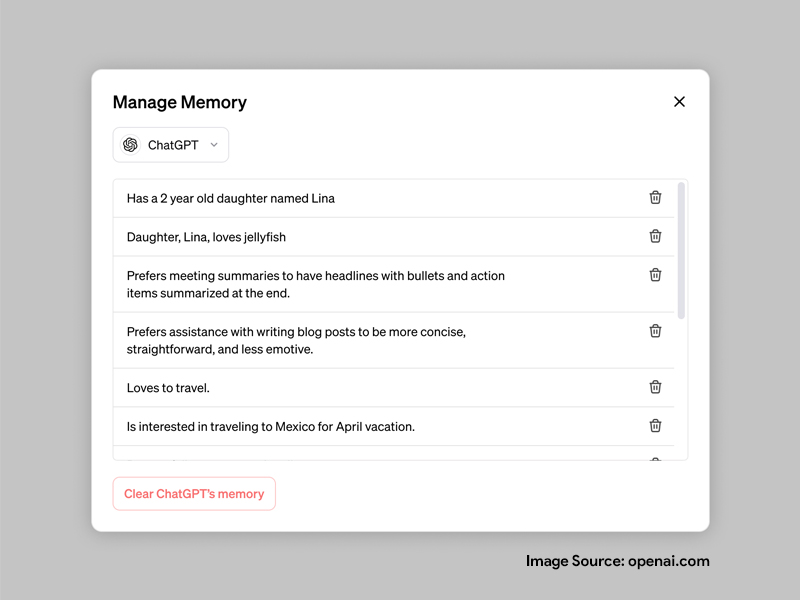
Recognizing the sensitivity of stored information, OpenAI has implemented robust user control features. Users have the ability to guide ChatGPT's memory by explicitly instructing it to remember or forget specific details. This level of control empowers users to tailor their interactions with the model, striking a balance between personalization and privacy.
OpenAI is committed to maintaining stringent privacy standards, ensuring that sensitive information is handled responsibly. The memory feature is designed with privacy in mind, and user data is treated with the utmost confidentiality.
Looking Ahead: The Future of Conversational AI
ChatGPT's memory functionality marks a significant step forward in the evolution of conversational AI. As the technology continues to advance, we can expect even more sophisticated memory features, enabling models to emulate human-like conversations with unprecedented accuracy.
The integration of memory in conversational AI not only enhances user experience but also opens doors to new possibilities in various domains. From virtual assistants to interactive storytelling, the applications of this technology are vast and promising.
A Leap Forward in Conversational AI
In conclusion, ChatGPT's memory feature represents a monumental leap forward in the realm of conversational AI. The ability to remember and forget dynamically enriches interactions, making them more engaging, personalized, and contextually aware. As we navigate the future of artificial intelligence, innovations like ChatGPT's memory feature redefine the possibilities of human-machine communication, bringing us closer to a seamless integration of AI in our daily lives.



Why Are Vertu Phones So Expensive?
Can a Smart Home Work Without Internet? Explained
Solana’s Worth in Future: What Could 1 SOL Be Worth?
How to Wake Up the System From Sleep Mode on Any Computer