In the competitive search engines, innovation is everything. But in 2011, a quiet war between two giants—Google and Bing—boiled over into a public controversy. Google accused Bing of copying its search results, sparking a fierce debate about originality, data collection practices, and the ethics of competitive intelligence. Over a decade later, the implications of this episode still echo in discussions about AI training, data sourcing, and tech ethics. What Actually Happened? In February 2011, Google engineers noticed something odd: when they ran rare, misspelled, or entirely fake queries through their search engine and manipulated the results manually, Bing began returning very similar—sometimes identical—results. The Google Sting Operation To confirm their suspicions, Google carried out a sting operation: They selected nonsense search terms such as “hiybbprqag” and “mbzrxpgjys.” Google manually inserted fake results for these queries. Within a few weeks, Bing...
In the competitive search engines, innovation is everything. But in 2011, a quiet war between two giants—Google and Bing—boiled over into a public controversy. Google accused Bing of copying its search results, sparking a fierce debate about originality, data collection practices, and the ethics of competitive intelligence. Over a decade later, the implications of this episode still echo in discussions about AI training, data sourcing, and tech ethics.
What Actually Happened?
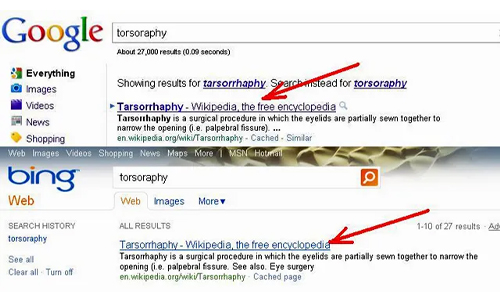
In February 2011, Google engineers noticed something odd: when they ran rare, misspelled, or entirely fake queries through their search engine and manipulated the results manually, Bing began returning very similar—sometimes identical—results.
The Google Sting Operation
To confirm their suspicions, Google carried out a sting operation:
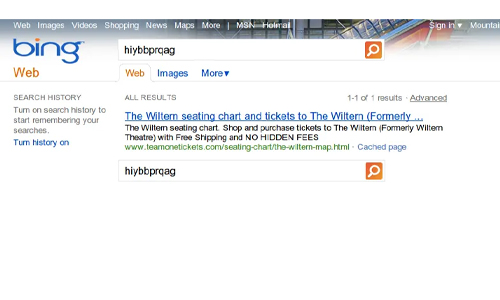
- They selected nonsense search terms such as “hiybbprqag” and “mbzrxpgjys.”
- Google manually inserted fake results for these queries.
Within a few weeks, Bing began showing the same fake results—despite these queries having no real-world value or presence.
This led Google to publicly accuse Bing of copying its search results.
How Did Bing Respond?
Microsoft did not deny using user clickstream data to improve Bing’s algorithms. Instead, they defended their approach, stating that they collected data through the Bing Toolbar and Internet Explorer, which users opted into. Microsoft framed it as using public data to refine results—not outright copying.
Here’s what Microsoft’s Harry Shum said at the time:
“We use multiple signals and approaches when thinking about ranking, and one of those is clickstream data we get from some of our users.”
Why Did It Matter So Much?
While it’s not illegal to use publicly available data, the crux of the controversy was how Bing did it and whether it was ethical. This event sparked deeper industry conversations about:
- Data ownership
- User consent
- Ethics in algorithm training
- Transparency in AI and search technologies
A Timeline of the Events
| Date |
Event |
| Jan 2011 |
Google observes strange patterns in Bing results |
| Late Jan 2011 |
Google sets up sting operation |
| Feb 1, 2011 |
Google goes public with its accusations |
| Feb 2, 2011 |
Microsoft defends Bing’s practices |
| Following Months |
The debate fuels wider industry discussions on data usage |
How Was Bing Using Google’s Results?
Bing wasn’t directly scraping Google’s search results. Instead, it was leveraging user behavior data:
- Users who installed the Bing Toolbar or used IE with Suggested Sites enabled allowed Microsoft to collect URLs clicked in response to queries.
- If users searched on Google and clicked a result, Bing could see that interaction and learn from it.
This informed Bing’s own ranking models.
Was It Really Copying?
Technically, no scraping was involved. But the outcome was so similar that Google’s fake results appeared on Bing—raising concerns over originality and fair competition.
Current Relevance: Why This Still Matters in 2025
Fast forward to today’s landscape of AI models, search engine evolution, and machine learning training, and this incident becomes eerily prescient.
- Large Language Models (LLMs) like ChatGPT or Gemini often raise concerns over training data sources—especially from publishers or competing platforms.
Data transparency and usage consent are hot-button issues.
The Bing-Google clash now serves as a case study in how user behavior data can influence products—and when it crosses ethical lines.
Today’s Bing: Smarter but Still Chasing Google
In recent years, Bing has invested heavily in AI and even integrated ChatGPT-like features. Yet, Google continues to dominate, holding around 91% of global search engine market share, while Bing remains at about 3%.
Bing’s AI Push: Learning from the Past
Microsoft’s heavy investments in AI search assistants (like Bing Chat, powered by OpenAI) show how the company is still keen to catch up—but using more sophisticated tools.
Still, the 2011 controversy is a reminder: how you learn matters as much as what you learn.
User Privacy and Consent: Then vs. Now
- In 2011: Many users weren’t aware that enabling a browser toolbar gave companies access to their browsing history.
- In 2025: Regulations like the GDPR and CCPA have forced tech giants to disclose their data collection methods, making consent more transparent.
The incident is often cited when discussing dark patterns, opt-in design flaws, and ethical data mining.
Google vs. Bing – Then and Now (Comparison Table)
| Feature |
2011 Google |
2011 Bing |
2025 Google |
2025 Bing |
| Market Share |
~66% |
~13% |
~91% |
~3% |
| AI Capabilities |
Early autocomplete, instant results |
Similar features |
Gemini (AI Assistant), Bard |
Bing Chat (OpenAI-powered) |
| Data Ethics |
Accused Bing |
Accused of copying |
Stronger data policies |
More transparent, post-incident |
| Browser Integration |
Chrome |
IE + Bing Toolbar |
Chrome + Android Ecosystem |
Edge + AI Search |
What Did the Tech World Learn?
This event is now studied in digital ethics and computer science courses as an example of:
- Competitive intelligence gone too far
- The fine line between inspiration and imitation
- The importance of clear user consent
- The role of sting operations in tech accountability
Frequently Asked Questions
1. What year was Bing caught copying Google’s results?
In 2011, Google conducted a sting operation that led to the accusation.
2. How did Bing copy search results?
Through user clickstream data gathered via Internet Explorer and the Bing Toolbar—specifically when users searched on Google and clicked on results.
3. Did Bing admit to copying?
Microsoft denied “copying” but acknowledged using user behavior data to refine results.
4. Is Bing still copying Google?
No public incidents since 2011 suggest direct copying. Bing now uses its own models and AI technology.
5. What changed after the incident?
Greater emphasis on user data transparency, AI ethics, and data consent practices across the tech industry.
While the “Bing caught copying search results from Google” episode may seem like a relic of the past, its implications are more relevant than ever. In an AI-driven world, how platforms source and use data is under the microscope. Microsoft’s Bing has evolved—but this incident remains a stark reminder that innovation must go hand in hand with integrity.



Why Are Vertu Phones So Expensive?
Can a Smart Home Work Without Internet? Explained
Solana’s Worth in Future: What Could 1 SOL Be Worth?
How to Wake Up the System From Sleep Mode on Any Computer