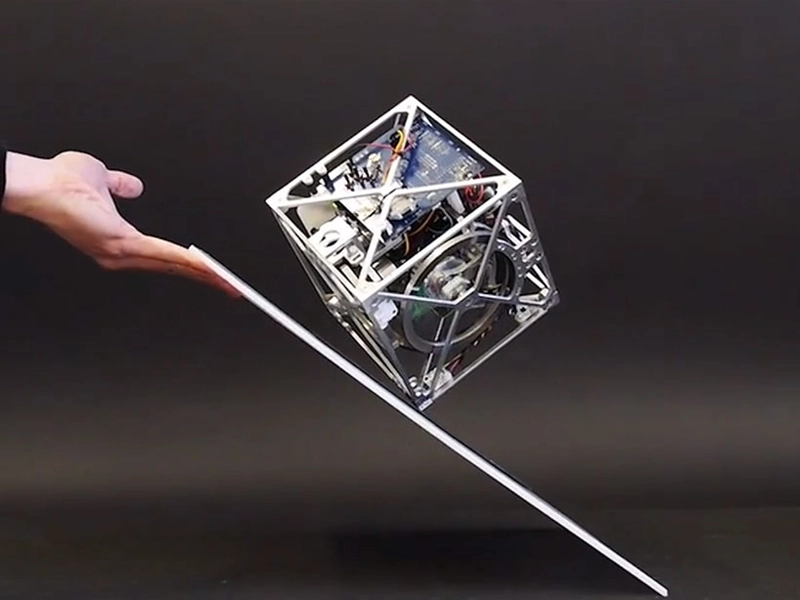
At first glance, it looks like an ordinary metal cube. No wheels. No legs. No visible movement system. Then suddenly, it jumps onto its edge, balances itself, and begins moving like a tiny robot performing physics magic. The Cubli robot is one of the most fascinating robotics experiments ever created. Originally developed by researchers at ETH Zurich, Cubli became an internet sensation for challenging how people imagined robots should move. Instead of using wheels or limbs, this cube relied entirely on momentum, balance, and reaction wheel technology. Even years later, it still feels like something pulled straight from the future. What Is the Cubli Robot? The Cubli robot is a self-balancing cube designed to: Jump from a resting position onto its edge Balance itself dynamically Rotate and reposition itself using internal motors The magic happens through three internal reaction wheels...
At first glance, it looks like an ordinary metal cube. No wheels. No legs. No visible movement system. Then suddenly, it jumps onto its edge, balances itself, and begins moving like a tiny robot performing physics magic. The Cubli robot is one of the most fascinating robotics experiments ever created.
Originally developed by researchers at ETH Zurich, Cubli became an internet sensation for challenging how people imagined robots should move. Instead of using wheels or limbs, this cube relied entirely on momentum, balance, and reaction wheel technology.
Even years later, it still feels like something pulled straight from the future.
What Is the Cubli Robot?
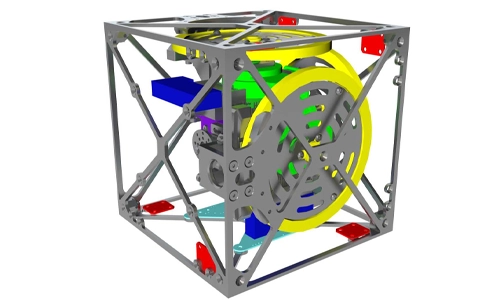
The Cubli robot is a self-balancing cube designed to:
- Jump from a resting position onto its edge
- Balance itself dynamically
- Rotate and reposition itself using internal motors
The magic happens through three internal reaction wheels mounted inside the cube. These wheels spin at high speed, storing momentum like miniature gyroscopes.
When the wheels suddenly brake, the stored momentum transfers into motion, allowing the cube to “jump” and balance itself upright.
It’s less like a traditional robot and more like a physics experiment that learned choreography
Why the Cubli Robot Went Viral
Back when the project first appeared online, robotics videos mostly featured humanoid machines or wheeled bots.
The Cubli robot looked completely different.
People were fascinated because:
- It moved without visible propulsion
- It balanced with eerie precision
- It transformed abstract engineering into something visually captivating
Watching a solid cube leap onto its corner felt almost impossible, like gravity briefly stopped paying attention.
The project quickly spread across YouTube, tech blogs, and engineering communities worldwide.
The Science Behind the Motion
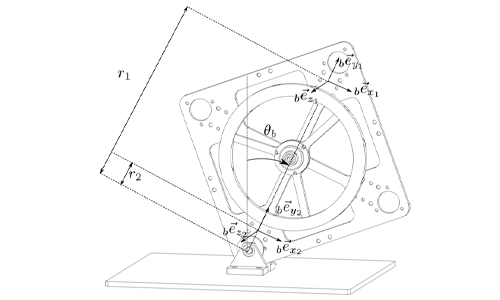
The core technology behind the Cubli robot is called a reaction wheel system.
Reaction wheels are commonly used in:
- Satellites
- Spacecraft stabilization systems
- Aerospace engineering
Instead of pushing against the ground, the cube manipulates its own internal momentum to generate movement.
The balancing itself relies on:
- Sensors
- Control algorithms
- Real-time motion correction
Tiny adjustments happen constantly inside the cube to prevent it from tipping over.
In simple terms, Cubli survives by continuously correcting its own instability.
Why Cubli Still Matters Today
Even though the original project dates back years, the ideas behind the Cubli robot remain highly relevant.
Modern robotics now heavily explores:
- Self-balancing systems
- Dynamic stabilization
- Compact mobility platforms
- AI-assisted movement control
In many ways, Cubli predicted the rise of robots that rely more on intelligent balancing than traditional mechanical movement.
Researchers at ETH Zurich even introduced a newer evolution called the One-Wheel Cubli, proving the concept still has room to grow.
A Robot That Made Engineering Feel Fun
What made Cubli special wasn’t just technical brilliance. It was accessibility.
You didn’t need an engineering degree to appreciate it.
The moment the cube sprang to life, the concept clicked instantly:
“This shouldn’t work… but it does.”
That’s the kind of technology people remember.
Could We See Similar Robots in the Future?
Absolutely.
The same principles behind the Cubli robot could influence:
- Compact delivery robots
- Space exploration systems
- Self-balancing mobility devices
- Advanced drone stabilization
As robotics continues shrinking hardware while increasing intelligence, momentum-based movement systems may become far more common.
The Cubli robot remains one of the internet’s most memorable robotics experiments because it blended science, creativity, and spectacle into one tiny metal cube.
It wasn’t trying to imitate humans.
It was redefining how movement itself could work.
And even today, watching Cubli balance on its edge still feels like seeing the future wobble into existence.



Solana’s Worth in Future: What Could 1 SOL Be Worth?
How to Wake Up the System From Sleep Mode on Any Computer
The Mokacam 4K Sports and Action Camera: Tiny but Powerful
How to Choose the Best Document Scanner for Your Needs